Commercial real estate for retail and logistics

Find the space your brand needs to sell, store and ship

Plain-language guides to storefronts, warehouses, fulfillment space and distribution centers — how each format works, what it costs to run and what to check before you sign a lease.

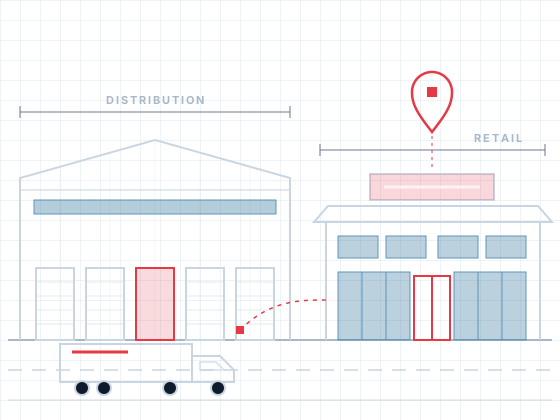
Line drawing of a distribution warehouse with loading docks next to a retail shopping center

How to find commercial space

A good site search follows the business, not the listing. Before touring a single property, work through these four stages in order — each one narrows the field and keeps you from paying for space you will not use.

Browse site-search guides
  1. Define how you sell and ship

    Walk-in retail, online-only fulfillment or a hybrid model each need a different footprint, ceiling height and customer access.

  2. Map customers and carriers

    Storefronts follow foot traffic and visibility; warehouses follow highway access, labor pools and the reach of last-mile delivery.

  3. Shortlist and inspect

    Check zoning and permitted use, clear height, dock doors, floor load, power capacity, frontage and parking against your list.

  4. Read the lease before you sign

    Term, rent escalations, shared operating costs, renewal options and expansion rights shape the real cost of the space.

Latest articles

All Space Guides

When to Move Inventory Out of Your Home

Когда я запускал свой интернет-магазин электроники, спальня служила одновременно складом и упаковочным цехом. Поначалу это работало: ноль арендной платы, полный контроль, всё под рукой. Но как только заказы перевалили за пару десятков в день, я понял, что домашний склад из конкурентного преимущества превратился в операционный тормоз. Дело не в том, дорос ли бизнес до «настоящего» […]

Read more

How Much Storage Space Does an Online Store Need?

The short answer: an online store usually needs more space than the products themselves suggest, because you must also account for packing supplies, receiving, staging, returns, and growth. A practical starting point for small ecommerce operations is often 200–500 sq ft for starter setups, 400–1,000 sq ft for growth-stage sellers, and […]

Read more

Space by the numbers

6

property formats covered, from street-level shops to fulfillment hubs

4

stages in a well-run site search, from business model to signed lease

3

core lease structures explained: gross, net and modified gross

32 ft

a common minimum clear height in modern distribution buildings

Explore by property type

Pick the format closest to your plans and start with the guides written for it.