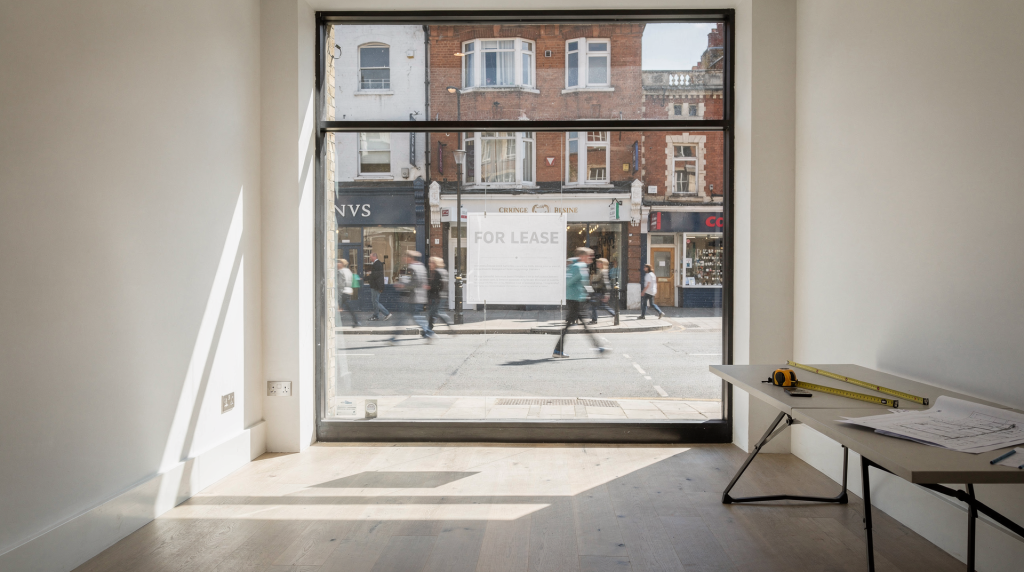
Leasing your first retail space is less about finding a nice shopfront and more about finding a location that supports your sales, your operations, and your cash flow. The right lease gives you room to grow; the wrong one can lock you into expensive mistakes for years.
If this is your first store, treat the process like a business decision, not just a real estate decision. The lease, the location, and the physical layout all affect how customers buy, how staff work, and how much margin you actually keep.
I’ve been on both sides of this equation—first as an e-commerce operator who started in a spare room and later as someone who had to figure out warehouse leases, 3PL contracts, and eventually retail space. The biggest lesson I learned: the physical space you choose either amplifies your operational efficiency or quietly drains your margin every single month. When you’re an online brand moving into brick-and-mortar, you’re not just picking a pretty storefront. You’re selecting a node in your supply chain that happens to face the street.
Start with the business model, not the building
Before looking at units, get clear on why you need a retail space. This sounds obvious, but I’ve watched too many founders fall in love with a space and then reverse-engineer a business case to justify it. The sequence matters: model first, square footage second.
Ask these questions first:
- Are you opening a pure showroom, a shop, or a hybrid space with stock on site?
- Do you need room for click-and-collect, local delivery, or in-store fulfillment?
- Will customers browse for long periods, or do they come in with a specific purchase in mind?
- Do you need storage, a back office, or a fitting room area?
- Is the goal brand visibility, immediate sales, or testing a neighborhood?
This matters because retail leases are usually based on the use you agree to up front. If your operations change later, the lease may not allow it without landlord consent. I’ve seen brands sign a standard retail use clause, then six months later want to run fulfillment out of the back room for same-day local delivery—only to discover their lease explicitly prohibits warehousing or distribution activity. That’s not a conversation you want to have with a landlord after you’ve already invested in shelving and packing stations.
For online-first brands, the operational reality is often hybrid. You might want a space that serves walk-in customers on Saturday but doubles as a micro-fulfillment center during the week. That dual-purpose requirement changes everything: the loading access you need, the storage-to-sales-floor ratio, the hours of operation, even the type of lease a landlord is willing to offer. Define this before you walk into a single viewing.
Common first-store mistake
Many first-time tenants choose a space for its appearance and ignore the operational fit. A beautiful shop with no storage, poor loading access, or restrictive opening hours can become a daily problem.
I’ll add another layer to this: the mistake isn’t just aesthetic over function—it’s underestimating how much back-of-house space a hybrid operation actually consumes. When I ran my electronics business, the storage area needed to handle incoming shipments, returns processing, and packing for local deliveries, all while keeping the sales floor presentable. That meant roughly 30-40% of total square footage dedicated to non-customer-facing operations. Most first-time tenants I advise budget 10-15% for storage and regret it within the first quarter. Measure your current inventory footprint, factor in seasonal peaks, and then add buffer. The math is unforgiving if you get it wrong.
Choose the right type of retail space
Not every retail unit serves the same purpose. The best choice depends on how your business sells. And for brands that started online, the calculus is different from a traditional retailer. You’re not just looking for foot traffic; you’re looking for a space that can bridge your digital and physical operations without creating two separate cost centers.
| Space type | Best for | Main advantage | Main risk |
|---|---|---|---|
| High-street shop | Walk-in footfall, brand presence | Visibility and impulse visits | Higher rent and tougher competition |
| Shopping centre unit | Established retail traffic | Built-in customer flow | Service charges and centre rules |
| Showroom | Appointment-led or considered purchases | Better presentation and lower stock needs | Less spontaneous traffic |
| Pop-up space | Testing a market or seasonal trade | Flexibility and lower commitment | Short term may limit fit-out investment |
| Hybrid retail/store room | Sales plus local fulfillment | Efficient for ecommerce brands | Needs careful space planning |
For many online-first brands, the best first retail move is not a full-scale flagship. It is a compact, flexible space that can handle sales and operations without forcing you into a long, expensive lease.
I’d go further: the hybrid model is often the only financially rational entry point. A pure high-street shop with no fulfillment capability means you’re still paying for a separate storage unit or 3PL fees on top of retail rent. That duplication kills margin. The hybrid space—think a ground-floor retail area with a decent basement or rear storage zone—lets you consolidate costs. But it demands more from the lease: you need a use clause that permits both retail sales and ancillary storage or distribution, and you need loading access that doesn’t conflict with customer hours. These aren’t details to discover after signing.
Understand the lease basics before you sign
A retail lease is a legal agreement giving you the right to occupy a commercial unit for a set period in exchange for rent and other payments. In England and Wales, retail leases commonly run from 3 to 10 years, although shorter and longer terms also exist.
The most important lease points to check are:
- Lease length
- Break clause
- Rent amount and payment schedule
- Rent reviews
- Service charge
- Repair obligations
- Use clause
- Alterations and fit-out rights
- Assignment and subletting rights
- Deposit or guarantor requirements
When I negotiated my first warehouse lease, I focused almost entirely on the monthly rent figure. That was a mistake. The service charge, the repair standard, and the rent review mechanism ended up costing more over the term than the base rent difference I’d negotiated. For a retail lease, the same principle applies but with even more variables. Every clause in that list above has a direct line to your operating costs. Treat them as commercial terms, not legal boilerplate.
The 1954 Act question
In England, many tenants have security of tenure under the Landlord and Tenant Act 1954, which can give a right to renew at the end of the lease unless the landlord has valid grounds to oppose or the lease was contracted out before signing. This is one of the biggest legal points to understand because it affects how secure your location really is.
If you want long-term stability, security of tenure may be valuable. If you want flexibility, a contracted-out lease can be easier to exit later. The right answer depends on your growth plan.
Here’s the nuance most first-time tenants miss: security of tenure isn’t just about staying put—it’s about negotiating leverage. If your lease has 1954 Act protection, the landlord can’t simply take the space back at the end of the term without statutory grounds and compensation. That gives you a stronger hand when discussing renewal terms. But for a brand testing its first physical location, being locked into a protected lease can feel like a trap if the location underperforms. Contracting out means you waive that renewal right, which landlords often incentivize with a rent reduction or more flexible break options. The decision should map to your confidence in the location and your timeline for proving the model.
Read the heads of terms carefully
Before the full lease is drafted, the landlord usually issues heads of terms, which summarize the main commercial points of the deal. This is the stage where the biggest negotiation wins often happen.
Check that the heads of terms clearly cover:
- Exact premises
- Term length
- Break rights
- Rent and rent-free period
- Service charge
- Use clause
- Repair standard
- Fit-out permissions
- Assigning or subletting
- Who pays legal and survey costs
Do not treat heads of terms as a formality. If a point is vague here, it often becomes expensive later.
I’ve learned to treat heads of terms as the deal’s architectural blueprint. Once they’re agreed, the lease draft largely follows that structure, and reopening points later is exponentially harder. The time to push for a rent-free period that genuinely covers your fit-out and early trading ramp-up is at this stage—not when the solicitor is already drafting. Same goes for clarifying whether the service charge is capped, whether the repair standard is “good condition” or “full repairing,” and whether the use clause wording is broad enough to accommodate your operational reality. If the heads of terms say “retail use” without further detail, assume the landlord will interpret that narrowly. Get specificity now.
Inspect the premises like an operator
A first-time tenant should walk the site with an operational mindset. Measure the space, study the flow, and imagine a normal trading day. When I view a unit now, I’m not looking at it as a customer would—I’m mentally running a shift: where does the delivery arrive, how does stock move to the sales floor, where do returns sit, what happens during a Saturday rush when the delivery driver shows up at the same time as peak foot traffic.
Check these physical points
- Is the frontage visible from the street?
- Can customers enter easily?
- Is there space for displays without crowding circulation?
- Is there enough back-of-house storage?
- Can stock be delivered without blocking customers?
- Are toilets, staff areas, and waste handling practical?
- Is the electrical load sufficient for your equipment?
- Is there internet availability?
- Are there signs of water damage, poor ventilation, or old plant?
If possible, compare the plan against the actual unit. Boundaries matter. So do rights to use common parts, loading areas, parking spaces, and signage locations.
One operational detail that often gets overlooked: the delivery schedule. If your unit is on a high street with restricted access hours or pedestrianized zones, your stock replenishment might be limited to a narrow early-morning window. That’s fine if you know it in advance and can plan staffing accordingly. It’s a disaster if you discover it on day one when a pallet of inventory is sitting on the pavement at 10 a.m. with customers trying to step around it. Ask the landlord about delivery access, check with neighboring tenants about their experience, and if possible, observe a delivery at the property before committing.
Bring a simple site checklist
- Measure usable sales area
- Measure storage area
- Check ceiling height
- Inspect access for deliveries
- Test mobile signal and internet options
- Look at nearby competitors
- Visit at different times of day
- Check foot traffic patterns
- Review nearby transport and parking
I’d add one more to that list: check the condition of the electrical panel and ask about the available power capacity. Retail equipment—lighting, POS systems, air conditioning, potentially refrigeration or servers for an online-integrated setup—can draw more than an older unit was designed for. Upgrading electrical infrastructure is expensive and often requires landlord consent. Know your power requirements before you sign.
Negotiate the money terms, not just the headline rent
The monthly rent is only part of the true cost. A cheap unit can become expensive once service charges, insurance, business rates, fit-out, and repairs are added.
| Cost item | What to check |
|---|---|
| Rent | Is it exclusive of business rates, VAT, and service charge? |
| Rent-free period | Does it cover fit-out time and early trading ramp-up? |
| Service charge | What does it include, and are there caps? |
| Insurance | Who pays, and for what risks? |
| Business rates | What is the likely liability for this location? |
| Deposit | How many months are required? |
| Legal fees | Who pays the drafting and negotiation costs? |
| Fit-out costs | Are landlord approvals needed before work starts? |
If you are opening your first store, cash flow matters more than prestige. Monthly rent payments can be easier to manage than quarterly payments, especially while sales are still building.
I always model the total occupancy cost as a percentage of projected revenue, not as a standalone number. A £2,500 monthly rent on a unit with low service charges and rates might be more affordable than a £2,000 rent on a unit where the additional costs push the total to £3,800. The headline rent figure is what landlords market; the all-in cost is what you actually pay. For a first store, I’d want that all-in figure to be conservative—ideally no more than 10-15% of projected turnover, leaving room for the months when sales dip. And on payment frequency: monthly direct debit is worth negotiating. Quarterly payments can create cash flow crunches that a new store doesn’t need.
Repair obligations can make or break the deal
Repair clauses are one of the most misunderstood parts of a retail lease. In a full repairing lease, the tenant may be responsible for maintaining the premises in a much broader way than expected.
Ask these questions:
- Are you taking the unit as-is?
- Will there be a schedule of condition?
- Are you responsible for hidden defects?
- Do you have to return the unit in better condition than when you took it?
- What happens at lease end if you installed fixtures?
A schedule of condition is especially useful for first-time tenants. It records the state of the premises at the start of the lease, which can help limit repair claims later.
This is an area where I’ve seen e-commerce brands get caught off guard. They’re used to variable costs—shipping, packaging, returns—and they treat the lease as a fixed cost. But a full repairing and insuring (FRI) lease effectively transfers the building’s maintenance risk to you. If the roof leaks or the HVAC system fails, that’s your problem, not the landlord’s. For a first retail space, I’d push hard for a schedule of condition and ideally limit the repair obligation to keeping the premises in no worse condition than at the start, rather than putting them into a better state. The difference in liability can be tens of thousands of pounds at lease end.
Fit-out and alterations: get permission in writing
Retailers often need to change lighting, signage, fixtures, displays, counters, or internal walls. Do not assume that small changes are automatically allowed.
Confirm:
- What alterations need landlord consent
- Whether consent can be refused reasonably
- Whether signage approval is included
- Whether reinstatement is required at lease end
- Whether you can install equipment such as air conditioning or data cabling
If your store depends on branding, visibility, or custom displays, these clauses are critical. A lease that blocks practical fit-out can turn a promising site into a frustrating one.
For online-first brands, the fit-out is often where the physical brand identity gets built for the first time. You’re not just installing shelves—you’re creating an environment that has to match the quality and aesthetic your customers expect from your digital presence. That might mean specific lighting, custom joinery, integrated screens for online inventory browsing, or a dedicated click-and-collect counter. All of that requires landlord consent, and the time to confirm that consent is before you sign the lease, not after. I’ve seen brands negotiate a rent-free period for fit-out, only to spend half of it waiting for landlord approvals on basic alterations. Get a clear timeline for consent in the heads of terms, and ideally a pre-approval for the specific works you know you’ll need.
Break clauses and exit rights
A break clause gives you the option to end the lease early if the business changes. For a first retail space, flexibility can be worth more than a slightly lower rent.
A good break clause should be clear about:
- When it can be used
- How much notice is required
- What condition the premises must be in
- Whether all rent and charges must be paid up to the break date
- Whether the clause depends on any technical conditions
Break clauses can fail if the wording is strict. If you want the option to leave, the wording must be checked carefully.
I’ve learned to treat break clauses as insurance, not as a plan B I hope to use. The conditions attached to a break can be surprisingly onerous: some require that you’ve complied with every single lease covenant up to the break date, meaning even a minor technical breach could invalidate your right to exit. Others require vacant possession, which means every fixture, every piece of stock, every cable tie must be removed. If you’re testing a location, negotiate a break clause that is unconditional or has conditions you can realistically meet. And factor the break date into your business planning: if the break is at month 18, you need enough trading data by month 12 to make an informed decision.
Understand the use clause
The use clause defines what you are allowed to do in the premises. This sounds simple, but it affects everything from product range to events and customer services.
For example, if your business starts as a fashion retailer and later adds accessories, tailoring, or coffee, the lease may need to allow that broader use.
A narrow use clause can create problems if you want to:
- Add new product categories
- Run workshops or events
- Offer click-and-collect
- Use part of the space as a showroom
- Sell online from the same unit
Negotiate for enough flexibility to grow without needing a new lease.
For e-commerce brands, the use clause is particularly sensitive because the line between retail, fulfillment, and distribution blurs quickly. If your lease says “retail shop for the sale of [specific goods],” and you start using the back room to pack online orders for courier collection, you might technically be in breach. Landlords care about this because different uses attract different business rates assessments, planning considerations, and wear on the building. I always recommend negotiating a use clause that explicitly permits omnichannel retail—sales in person, click-and-collect, and ancillary storage and dispatch of goods sold through any channel. It’s a small wording change that prevents a big operational headache.
Step-by-step process for leasing your first retail space
1. Define the store model
Decide whether the space is for sales, storage, collection, showrooming, or all four. Be specific about the revenue and operational role this location plays. If it’s a hybrid fulfillment hub, that changes the square footage split, the access requirements, and the lease terms you’ll need.
2. Set a realistic budget
Include rent, deposit, business rates, service charge, insurance, fit-out, legal fees, and working capital. Then add a contingency of 15-20% for costs you haven’t anticipated—because there will be some. The fit-out alone often runs over budget once you account for compliance works, unexpected electrical upgrades, or delays.
3. Shortlist the right locations
Look at footfall, customer profile, competition, transport, parking, and neighborhood fit. But also check last-mile delivery logistics: can couriers access the unit easily? Is there a nearby parcel drop-off point for returns? These operational factors matter as much as customer traffic for a hybrid brand.
4. Review the unit operationally
Check access, visibility, storage, frontage, utilities, and delivery logistics. Walk the space at different times of day. Talk to neighboring tenants about their experience. Measure everything yourself—don’t rely solely on the landlord’s floor plan.
5. Negotiate heads of terms
Focus on term, rent, break rights, use, repairs, and incentives. This is your best window to shape the deal. Once heads of terms are agreed, the legal draft will largely lock in those commercial points.
6. Review the lease properly
Check every clause that affects money, flexibility, repairs, and exit rights. Don’t skim the service charge provisions or the repair obligations. If something is unclear, get it clarified in writing before signing.
7. Plan fit-out and compliance
Confirm permissions, timelines, health and safety obligations, and any required approvals. Build in buffer time for landlord consent processes and contractor availability. The lease start date is not your opening date.
8. Prepare for opening
Set up utilities, signage, stock flow, staffing, and launch marketing before the handover date. A soft launch period—trading quietly for a week or two before the official opening—can help you iron out operational wrinkles without public scrutiny.
First-time tenant checklist
Use this checklist before signing:
- I know why I need the space
- I know how the store will make money
- I understand the total occupancy cost
- I have reviewed the use clause
- I have checked repair obligations
- I have confirmed fit-out permissions
- I know whether the lease has a break clause
- I understand whether the lease is protected by the 1954 Act
- I have checked service charge and hidden costs
- I have inspected the premises in person
- I have compared the plan with the actual unit
- I know my exit strategy if the store underperforms
I’d add one more item to that list: I have modeled the cash flow for the first six months, including a scenario where revenue is 30% below projections. If the numbers still work in that downside case, you’ve built in enough margin to survive the early trading period. If they don’t, the lease terms need to be more flexible, or the fixed costs need to be lower.
Typical mistakes to avoid
1. Signing for the wrong size
Too large and the space drains cash. Too small and the store feels cramped within months. The right size is determined by your operational model, not by what’s available or what looks impressive. Measure your current inventory, your peak season stock levels, and your projected customer flow, then work backward to the square footage you actually need.
2. Underestimating ongoing charges
Service charges, insurance, and business rates can change the economics of the store. I’ve seen service charges double year-on-year in some buildings because of unexpected maintenance costs. Ask for the service charge history for the last three years, and check whether there are caps or consultation rights for major expenditure.
3. Ignoring the fit-out timeline
A lease start date is not the same as an opening date. Build in time for works, delivery delays, and approvals. The gap between lease commencement and actual trading is dead rent—you’re paying but not earning. Minimize it with realistic project planning, but don’t compress it so much that the fit-out quality suffers or compliance steps get skipped.
4. Accepting vague repair wording
“Take as seen” can hide future repair liabilities if the lease is not carefully negotiated. Always push for a schedule of condition, and if the landlord resists, ask yourself why. A landlord confident in the building’s condition should have no issue documenting it.
5. Forgetting growth
If the business expands, can the lease support that growth, or will it box you in? This isn’t just about square footage—it’s about the use clause, the assignment and subletting rights, and the ability to make alterations. A lease that works for your business today but can’t accommodate your business in 18 months is a constraint, not an asset.
When to get professional help
A first retail lease is one of those moments where expert advice pays for itself quickly. A solicitor can review legal risk, and a surveyor can assess whether the location and lease terms are commercially sensible.
Get help if:
- The lease term is long
- The repair obligations are broad
- The unit needs significant fit-out
- The rent is high relative to turnover
- The lease has complex service charge provisions
- You are unsure about renewal or exit rights
I’d add: get help if this is your first commercial lease, period. The cost of a good retail solicitor and a commercial surveyor is a fraction of the liability you can incur from a poorly negotiated lease. A solicitor who specializes in commercial property will spot issues in the repair clause, the rent review mechanism, or the break conditions that a generalist might miss. A surveyor can benchmark the rent against market comparables and advise on whether the service charge is reasonable. For a first-time tenant, this professional support isn’t an expense—it’s risk mitigation.
Conclusion
Leasing your first retail space is really about balancing three things: location, flexibility, and cost. The best first lease is not always the cheapest or the most visible one; it is the one that supports how your business actually trades.
If you define your model clearly, inspect the unit like an operator, and negotiate the lease with your exit plan in mind, you give your store a much better chance of succeeding.
For brands that started online and are now adding a physical footprint, the transition is significant but manageable if you approach it with the same analytical rigor you applied to your e-commerce operations. The lease is not just a document—it’s the operating system for your physical retail presence. Get it right, and it enables growth. Get it wrong, and it becomes a fixed cost that limits every other decision you make.
FAQ
How long should a first retail lease be?
For many first-time tenants, a shorter term with a break option is safer than locking into a long commitment. The best length depends on how much risk you can carry and how much you plan to invest in fit-out. If you’re spending heavily on a bespoke fit-out, you may need a longer term to amortize that investment. If you’re testing a concept, a 3-year lease with a break at 18 months gives you enough time to gather data without a long-term liability.
What is a break clause in a retail lease?
A break clause lets you end the lease early if certain conditions are met. It is useful if trading is weaker than expected or if you need to relocate. The key is understanding the conditions attached: some breaks are unconditional, others require full compliance with all lease terms, vacant possession, and payment of all sums due. The stricter the conditions, the less valuable the break clause becomes in practice.
Do I need to pay a deposit for a retail unit?
Often yes. Landlords may ask for a rent deposit or a guarantor, especially for a first-time tenant or a new business with limited trading history. A typical deposit is 3 to 6 months’ rent, held in a rent deposit deed. Negotiate for the deposit to be returned or reduced after a period of successful trading, and ensure the deed specifies when and how the landlord can draw on it.
Can I change the shop layout after signing?
Usually only if the lease allows alterations and the landlord approves them where required. Always check before committing to any fit-out plan. Even non-structural changes like installing shelving or moving a counter may require consent, depending on the lease wording. Get pre-approval for the specific works you plan during the heads of terms stage.
What is the biggest hidden cost in a first retail lease?
Service charge, business rates, and repair liabilities are common surprises. The headline rent rarely tells the full story. I’d also add fit-out overruns and the cost of compliance works—fire safety upgrades, accessibility improvements, or electrical works that only become apparent after you take possession. Always budget a contingency for these.
Should I choose a high-street shop or a pop-up first?
If you are testing demand, a pop-up or shorter-term space often makes more sense. If you already have proven local demand and need a permanent presence, a standard shop lease may be better. For online-first brands, a pop-up can also serve as a low-risk way to gather customer data, test operational workflows, and build local brand awareness before committing to a longer-term location.