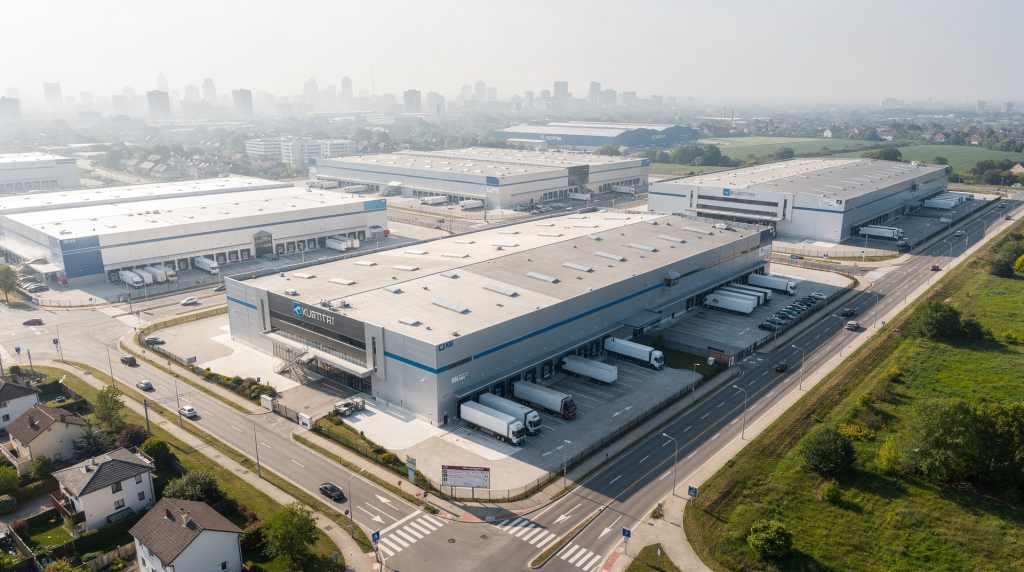
Choosing a warehouse location isn’t about finding the cheapest rent. It’s about finding the site that delivers the best balance of shipping speed, labor access, operating cost, and long-term flexibility for your order profile and growth plan.
For e-commerce brands, the wrong location quietly damages margins every day. Higher parcel spend, slower delivery promises, labor shortages, and avoidable congestion eat into profit in ways that don’t show up on a lease comparison spreadsheet. The right location, by contrast, improves service levels and gives the business room to scale without forcing an early move. I learned this the hard way when my online electronics store outgrew the spare room. Our first “cheap” warehouse looked great on paper—until we realized the extra shipping cost and hiring headaches wiped out the rent savings within two quarters.
Why warehouse location matters more than rent
A warehouse is part of your fulfillment system, not just a real estate expense. A building that looks inexpensive on paper can become costly if it sits too far from customers, lacks labor, or cannot support your operating model. The core trade-off is simple:
- Closer to customers usually means faster delivery and lower last-mile cost, but higher occupancy cost.
- Cheaper outlying sites may reduce rent, but often increase transit times, shipping expense, and labor friction.
- Better highway access can cut transportation time even if the building is not the lowest-cost option.
When you’re running an e-commerce operation, every mile between the warehouse and the end customer adds to your parcel rates and eats into delivery promises. But rent is only one line item. A site with a slightly higher base rent but immediate access to a major interstate and a deep labor pool can easily outperform a discount location that forces carriers to sit in traffic and leaves you scrambling for seasonal staff.
Start with the operating model, not the map
Before comparing locations, define how the warehouse will actually work. The most useful starting point is your order profile, SKU mix, peak seasonality, inbound rhythm, and service targets. I’ve seen too many brands fall in love with a building because it “looked right,” only to discover the layout couldn’t handle their peak throughput or the dock configuration didn’t match their carrier schedule.
Ask these questions first:
- How fast do customers expect delivery?
- What percentage of orders ship same-day, next-day, or in 2–3 days?
- Are you shipping mostly small parcels, bulky items, or mixed cartons?
- How seasonal is demand?
- Will the site support only storage, or also returns, kitting, or light assembly?
If you skip this step, it’s easy to overpay for a location that looks “good” but doesn’t fit the business. For example, a brand doing mostly small-parcel same-day shipments needs an infill location near a dense customer base and carrier hubs, not a massive distribution center in a rural industrial park. Conversely, a business with bulky items and 3–5 day delivery promises might prioritize floor space and dock capacity over proximity.
The main factors to compare
A useful comparison framework weighs the factors that affect both service and profit. For most e-commerce operators, the biggest ones are freight access, labor, customer proximity, real estate quality, expansion potential, and lease flexibility. These aren’t just bullet points for a broker’s pitch—they directly impact your daily fulfillment costs and ability to scale.
1. Customer proximity and delivery radius
Warehouse location should reflect where orders actually come from. If most customers live in one region, a facility closer to that demand base can lower transit times and improve delivery promises. This isn’t just about map distance; it’s about the density of your order volume and the service level you’ve promised.
A practical approach is to map orders by:
- zip code or postcode
- order volume
- parcel weight and dimensions
- delivery speed requirement
- repeat-customer concentration
This reveals whether you need an infill site near a dense population center, a regional hub, or a more central national distribution node. When I mapped my own order data years ago, I was surprised to find that 70% of our customers clustered in just three metro areas. That insight shifted our entire location strategy from a single central warehouse to a two-node network that cut average transit time by a day and reduced last-mile spend by nearly 15%.
2. Transportation access
A good warehouse location should connect cleanly to highways, interchanges, ports, rail, or airports depending on your shipping pattern. Even a few minutes of congestion on the last mile to the highway can delay carrier pickups and push shipments into the next day’s cycle.
Check:
- distance to major highways
- traffic congestion on the last mile to the road network
- access for box trucks and articulated vehicles
- trailer parking and turning space
- carrier pickup feasibility
A site with awkward truck access can create daily delays even if the building itself is modern. I once toured a warehouse with a beautiful interior but a loading area that required 53-foot trailers to blind-side back off a narrow side street. The carrier surcharges and missed pickups would have made it a non-starter.
3. Labor market quality
For e-commerce, labor availability is often as important as square footage. Peak-season hiring, shift coverage, and retention can make or break performance. A warehouse in a cheap area with scarce labor can end up more expensive than a pricier site in a deeper labor market, once you factor in overtime, temp agency markups, and the cost of late shipments.
Compare labor markets by looking at:
- local unemployment and competing employers
- commute patterns
- wage expectations
- labor turnover risk
- availability of temp staff during peak periods
During the holiday rush, having access to a reliable temp workforce within a 30-minute commute radius can be the difference between hitting delivery promises and disappointing customers. I’ve seen operations where the rent was low but the nearest population center was 45 minutes away, and they simply couldn’t staff up for Q4 without offering unsustainable wages and shuttle services.
4. Total occupancy cost
Do not compare rent alone. Compare total occupancy cost, including utilities, taxes, insurance, labor access, freight, and likely retrofit spend. Many e-commerce leases are triple net (NNN), meaning the tenant pays base rent plus a share of property taxes, building insurance, and common area maintenance. Those additional costs can add 15–30% to the headline rate, and they vary significantly by location and building condition.
Typical hidden cost drivers include:
- higher parcel spend because the site is farther from customers
- extra linehaul miles
- more labor required because of poor layout
- power upgrades for automation
- dock modifications
- floor repairs or racking changes
When I model a location, I always build a pro forma that rolls up rent, NNN charges, estimated freight differential, and any one-time capital improvements. A building with a $0.50/sq ft lower base rent but $0.30/sq ft higher NNN and $20,000 in dock modifications may not be the bargain it appears.
5. Building suitability
The location may be excellent, but if the building cannot support your workflow, it’s the wrong site. Key physical factors include clear height, dock count, slab quality, power capacity, and staging room. For e-commerce, where throughput and pick-pack efficiency matter, the building’s bones directly affect labor productivity and the ability to add automation later.
Pay attention to:
- clear height for dense storage (at least 24–28 feet for racking, higher for automation)
- dock door ratio for inbound and outbound flow (one dock per 10,000–15,000 sq ft is a rough rule of thumb)
- trailer and car parking
- column spacing (wider is better for racking and forklift movement)
- floor flatness and slab strength (essential for very narrow aisle equipment)
- sprinkler system compatibility (ESFR sprinklers allow higher storage density)
- lighting and ventilation
- room for carrier cages and staging
I’ve walked away from buildings with great highway access because the clear height was only 18 feet, which would have forced us into a sprawling layout with higher labor costs. The building has to earn its place in your fulfillment system.
6. Expansion potential
E-commerce grows in waves. Your current footprint may work today but fail in 18 months if there’s no room to expand. Moving a fulfillment operation is disruptive and expensive—downtime, IT relocation, racking teardown, and the risk of losing staff during the transition. That’s why expansion potential should be part of the decision from day one.
Ask whether the site offers:
- adjacent space
- expansion rights (right of first refusal or option on contiguous space)
- flexible lease terms (shorter initial term with renewal options, or the ability to surrender part of the space)
- multi-phase occupancy options
- ability to add automation or more docks later
If growth is likely, a slightly higher rent for a building with guaranteed adjacent expansion space can be far cheaper than a forced relocation in two years.
A practical scorecard for comparing sites
A weighted scorecard makes the decision less emotional and easier to defend internally. When I evaluate locations, I assign weights based on the brand’s specific priorities—a next-day delivery business will weight customer proximity and carrier access heavily, while a slower B2B shipper may prioritize land cost and expansion potential.
| Criterion | What to measure | Why it matters |
|---|---|---|
| Customer proximity | Average ship distance, delivery-time performance | Impacts transit speed and parcel cost |
| Highway access | Minutes to major routes, congestion risk | Affects carrier efficiency and reliability |
| Labor availability | Hiring pool, wage rates, turnover | Affects staffing stability and service levels |
| Building fit | Clear height, docks, power, staging | Determines operational efficiency |
| Total cost | Rent, utilities, freight, labor, retrofit | Shows true cost, not just headline rent |
| Expansion potential | Space to grow, lease flexibility | Protects against early relocation |
| Risk profile | Flood, zoning, access disruption, operating constraints | Reduces operational surprises |
How to compare two warehouse locations step by step
Step 1: Map your demand
Plot customer orders by region and delivery promise. If most volume is concentrated in a few metro areas, location strategy should follow that demand. Don’t rely on intuition—pull actual order data from the last 12 months and visualize it. I’ve seen brands assume their customers were evenly distributed, only to discover a heavy skew toward one coast that made a single central warehouse suboptimal.
Step 2: Model shipping cost
Compare outbound freight by lane, not by guesswork. Use origin, destination, weight, cube, carrier mix, and service level to estimate the true shipping impact of each site. A location 50 miles farther from your customer base might add $0.80–$1.20 per parcel, which on 100,000 orders a year is real money. Get rate quotes from your carriers for each candidate address.
Step 3: Check labor reality
Visit the area, review wage levels, and study competing employers. A strong labor pool can outweigh a modest rent premium. Talk to local staffing agencies about temp availability during peak season, and drive the commute routes during shift-change times. A warehouse that looks close to a population center on a map might be a 40-minute drive in rush hour.
Step 4: Review the building
Inspect the actual physical condition, not just the brochure. Roof, floor, docks, sprinklers, pavement, drainage, and pest control all matter. Bring your operations lead and a contractor if possible. I’ve encountered buildings with brand-new office build-outs but a failing dock leveler system that would have cost $50,000 to replace—a detail the listing conveniently omitted.
Step 5: Test future capacity
Ask whether the site can handle volume spikes, product line changes, and automation needs. If the answer is unclear, treat it as a risk. Can you add a mezzanine? Is there room for a conveyor system? Will the electrical service support additional charging for electric forklifts or AMRs? These questions prevent expensive surprises later.
Step 6: Score and rank
Assign weights to each criterion based on business priorities. For example, a next-day e-commerce brand may weigh customer proximity and carrier access more heavily than rent, while a slower-moving B2B shipper may prioritize land cost and expansion potential. Use the scorecard to create a clear, defensible ranking that aligns stakeholders around the best operational decision, not just the cheapest lease.
Common mistakes e-commerce brands make
- Choosing the cheapest rent without modeling shipping cost
- Ignoring labor availability until hiring becomes a problem
- Underestimating the impact of highway access and congestion
- Selecting a building that cannot support future automation
- Forgetting to check dock count, parking, and staging space
- Comparing sites only on square footage instead of operating fit
- Failing to account for seasonality and peak staffing needs
I’ve made several of these mistakes myself. The most painful was underestimating how quickly a “good enough” dock configuration would bottleneck during our holiday surge. We ended up renting temporary container storage and paying overtime for a night shift just to keep orders moving. The lesson: operating fit trumps square footage every time.
A simple decision rule
If two locations are similar, choose the one that better supports service levels and labor stability. If one site saves rent but adds shipping cost, compare the annualized difference, not the monthly lease line. In many e-commerce cases, lower transit cost and better labor access will matter more than a small rent discount. A $1,000/month rent savings that costs you $2,500/month in extra shipping and temp labor is a losing trade.
Warehouse location checklist
Use this checklist before signing:
- Customer demand map completed
- Shipping lanes costed
- Labor market reviewed
- Highway and carrier access checked
- Building clear height and dock count verified
- Power and technology needs confirmed
- Expansion potential assessed
- Total occupancy cost modeled (including NNN, utilities, freight differential)
- Zoning and operational constraints reviewed
- Peak-season staffing plan tested
When a higher-cost location is still the better choice
A more expensive warehouse can be the right choice when it:
- cuts delivery times enough to improve conversion or retention
- reduces last-mile spend materially
- supports same-day or next-day delivery
- gives access to a deeper labor pool
- allows operational growth without relocation
- avoids costly retrofits or workflow bottlenecks
In other words, the best site is the one that lowers the cost of serving customers, not necessarily the one with the lowest rent. I’ve recommended locations with 15–20% higher base rent because the shipping savings and labor stability more than compensated, and the brand avoided a disruptive move two years later.
FAQ
What is the most important factor when comparing warehouse locations?
The most important factor is fit with your operating model: customer demand, freight economics, labor access, and scalability should come before rent. A cheap building that can’t support your fulfillment process is an expensive mistake.
Should e-commerce brands prioritize proximity to customers?
Yes, especially if delivery speed is part of the promise. Closer locations usually improve transit times and reduce last-mile costs. For brands offering same-day or next-day delivery, proximity is often non-negotiable.
Is a cheaper warehouse outside the city always better?
No. Lower rent can be offset by higher shipping costs, labor issues, and slower delivery times. You have to model the total cost to serve, not just the lease rate.
How do I compare two warehouse sites objectively?
Use a weighted scorecard that includes customer proximity, freight cost, labor availability, building quality, and expansion potential. This removes emotion and helps align the team around operational priorities.
What building features matter most for e-commerce?
Clear height, dock doors, trailer parking, power capacity, staging room, and floor quality are among the most important. These directly affect throughput, labor efficiency, and the ability to add automation.
Conclusion
Comparing warehouse locations for e-commerce means evaluating the full operating system, not just the lease rate. The best site is usually the one that minimizes total cost to serve customers while supporting labor, growth, and day-to-day fulfillment performance.
If the decision is approached with demand mapping, shipping analysis, labor review, and a disciplined scorecard, the result is far better than choosing the building with the lowest quoted rent. Having lived through both the cheap-warehouse regret and the strategic-location payoff, I can say with confidence: the right warehouse is an investment in your brand’s ability to deliver on its promises, not a cost to be minimized.